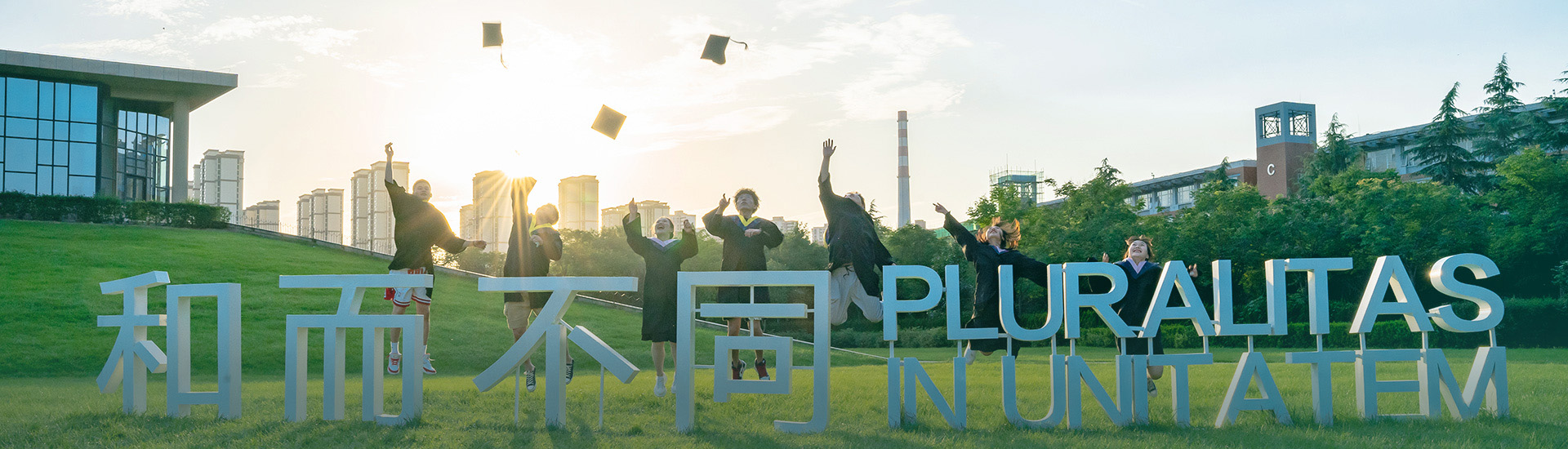
As an innovative university, over the course of 31 years of educational exploration, Xi’an Eurasia University has delivered its answer of “industry-oriented and student-centered higher education.” Through conceptual innovation and systemic reconstruction, the university is gradually realizing a new vision of higher education that cultivates vocational competence oriented toward “positions,” life-shaping capability oriented toward the “whole person,” and independent thinking capability oriented toward “critical thinking.” Through the “Eurasia Education Field,” the university continuously injects a “high-standard culture” into students, with the aim that graduates may enter society with a clear mind and a “whole-person” disposition, enabling them to work efficiently and live openly.
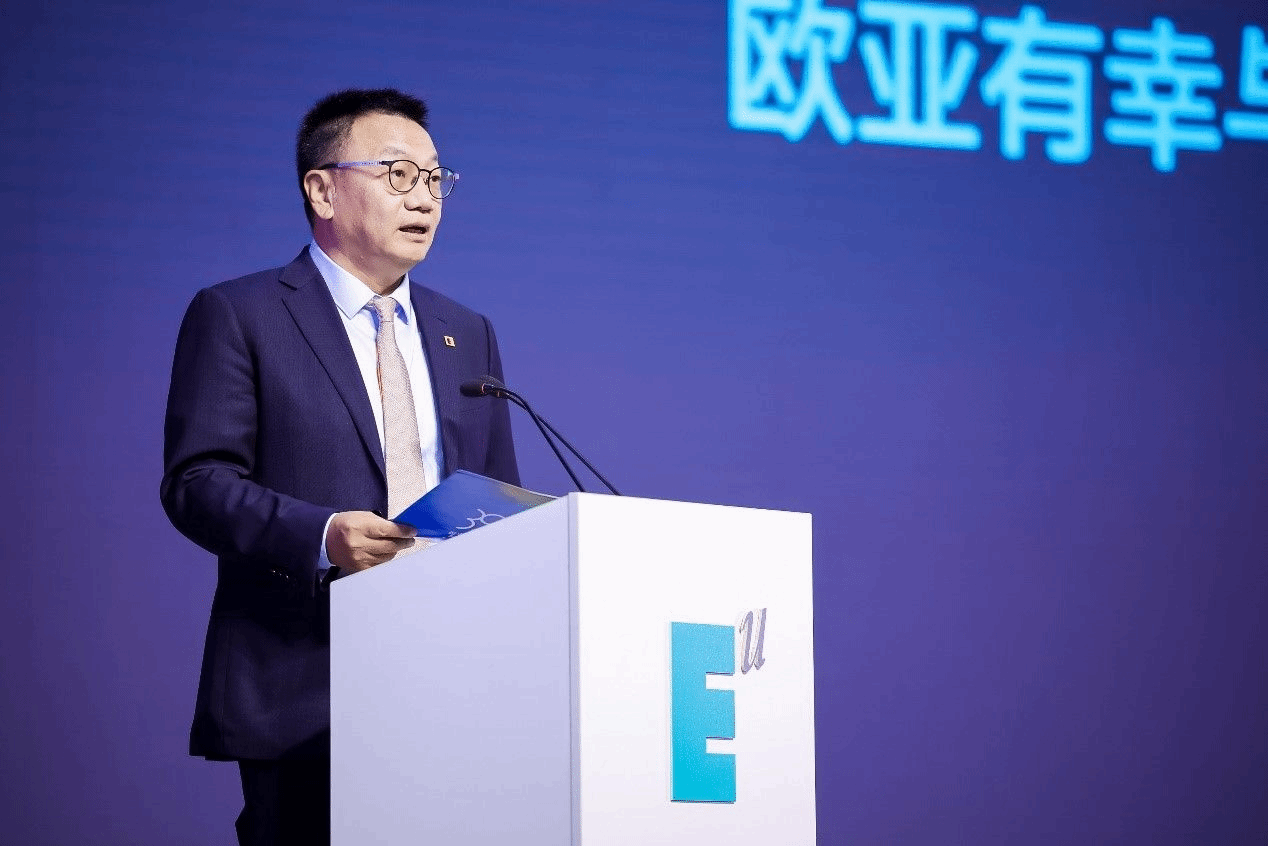
Professor Hu Jianbo, Founder of Xi’an Eurasia University, delivers a speech at the university’s 30th Anniversary Celebration
On October 18, 2025, Xi’an Eurasia University celebrated its 30th anniversary. At the celebration, founder Professor Hu Jianbo stated in his speech: “Over the past 30 years, we have gone through a complete process of establishing ourselves, exploring ourselves, and confirming ourselves. Standing at a new starting point after 30 years, we do not dare to claim the ambition of building a ‘world-class university’; we only wish to continue answering Spencer’s question: ‘What knowledge is most valuable?’—knowledge that prepares one for a fulfilling life. ‘What kind of life is most precious?’—a life in which one can make oneself shine, and also allow others to shine through oneself.” At a grand ceremony filled with distinguished guests, Xi’an Eurasia University did not speak of lofty ambitions, but instead spoke of striving to help students prepare for a fulfilling life; it did not speak of “grand ideals,” but only hoped that Eurasia students, while making themselves shine, could also illuminate others. These seemingly ordinary yet highly unusual words are precisely the answer Xi’an Eurasia University has gradually formed over 31 years of educational exploration.
Returning to the Essence of Higher Education
In the era of mass higher education, perhaps the greatest misunderstanding of higher education lies in the word “higher.” Because of this word, people often hold unrealistic expectations about university education, and consequently often leave disappointed. In the context of the universalization of higher education, the best way to truly understand its essence may be to “de-hierarchize” it, to regard it simply as a stage of life, and to carefully examine the role and function this stage plays within a person’s life. Under China’s current education system, those entering university are high school graduates, and society’s general expectation for university education is that graduates should be able to work independently and live freely in society. Therefore, our most direct understanding of the essence of higher education is to transform high school graduates, who have just reached adulthood, through three to four years of university education, into individuals capable of independent work and independent living in society.
So what are the typical characteristics of Chinese high school graduates? First, they are mainly engaged in basic knowledge learning; second, their daily lives are taken care of by their families; and third, they have almost no social experience. There is relatively little disagreement regarding these characteristics, but there are many differing views on what constitutes an “excellent” university graduate. Thus, different answers to the question of “what kind of graduate is high-quality” also reflect different quality orientations among institutions in talent cultivation. In this regard, current societal evaluation tends to favor highly visible employment indicators. In other words, if graduates of a university have strong employment outcomes, the university is generally considered to have high talent cultivation quality. Although evaluating educational quality solely based on employment outcomes is one-sided, it remains the most intuitive and widely accepted indicator.
Over the course of 31 years of educational exploration, as an application-oriented university, Xi’an Eurasia University first fully recognizes that employment quality is one of the most important indicators of higher education quality. However, on the premise that graduates possess solid professional competence and the ability to work independently, it simultaneously proposes two additional indicators that are equally important: independent living capability and independent thinking capability. In the view of Xi’an Eurasia University, work is only one dimension of a person’s life in society; beyond work there is also life. “Life” is not merely “survival,” but requires an independent philosophy of living and the ability to take care of oneself comprehensively. This capability is not innate; high school graduates generally do not possess it and must acquire it through systematic learning, otherwise they risk becoming “work machines” who can only work but cannot live—a condition that is not uncommon. At the same time, in a relatively complex social environment, the ability to judge people, events, and right and wrong is crucial; independent thinking is a foundational capability that determines whether graduates can develop sustainably and live happily in society.
Therefore, returning to the essence of higher education, the answer of Xi’an Eurasia University is to transform high school graduates, who are like a blank sheet of paper, through four years of university education into graduates capable of independent work, independent living, and independent thinking, and then allow them to enter society with confidence in both work and life. More importantly, the university regards these three capabilities as equally important rather than prioritizing one over another, elevating independent living and independent thinking to the same level of importance as independent work. Behind this lies Xi’an Eurasia University’s fundamentally different understanding of educational quality compared with most universities in China, as well as a more complete recognition of human socialization in higher education, for which it is willing to assume greater educational responsibility.
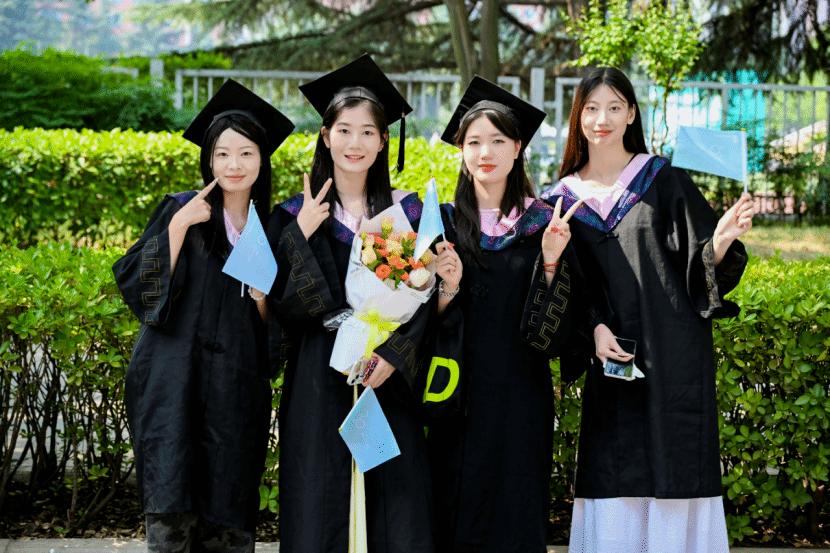
Graduates pose for a group photo following the 2025 Commencement Ceremony of Xi’an Eurasia University
Cultivating Professional Competence Through an Industry-Oriented Approach
In the context of structural adjustment in China’s higher education system, in July 2024, Hu Jianbo explicitly proposed a new educational philosophy of “industry-oriented education.” Since then, the university’s guiding principle has been reshaped into “industry-oriented and student-centered education.” This marks the most significant adjustment in its philosophy since 2005, when it first proposed “student-centered education.”
As a major conceptual reform, Xi’an Eurasia University had to systematically construct supporting reforms in order to implement this new philosophy across the entire talent cultivation process. The university first required the heads of independent academic units—deans of schools—to clearly identify target enterprises for each discipline and accurately describe their talent needs. After three rounds of systematic sorting, each school gradually completed this task, but this was far from sufficient. In October 2024, the university further deepened its reform by launching a two-month “program drill” across the entire institution, requiring the leaders of all 38 undergraduate programs to precisely identify target enterprises and related information, including enterprise lists, talent requirements, demand scale and competency profiles, corresponding talent cultivation models, and required institutional support resources.
Because program leaders previously focused mainly on teaching and had little exposure to admissions and employment, they encountered significant difficulties during this process. As a result, Xi’an Eurasia University innovatively established the position of “Program Owner” among Chinese universities, fully driving the transformation of program leaders into program owners, each leading a small team responsible for admissions, teaching, and employment outcomes of a program. As operators of each program, the capability of the program owner team directly determines whether the industry-oriented educational philosophy can succeed. Therefore, the university rapidly advanced supporting reforms in functions, compensation, and performance systems for program owners.
In terms of responsibilities, Xi’an Eurasia University significantly enhanced the operational and managerial functions of program owners while gradually stripping away pure teaching responsibilities. Previously, about 80% of a program leader’s work was teaching; after becoming a program owner, 80% of their work shifted to operational and industry-facing activities. In terms of compensation and performance, the proportion of performance-based salary increased from 20% to 80%. In addition, over the course of more than one year, the university conducted four workshops for program owners to gather feedback and align understanding. For many program leaders, the role of program owner is highly challenging, and there is inevitably a group unwilling to change. Therefore, the university introduced an AB-role mechanism; if the A role cannot or will not change, the B role takes over. As the pioneer force implementing the “industry-oriented” reform, the willingness, capability, and determination of program owners are critical to success, and therefore strong reform measures are necessary.
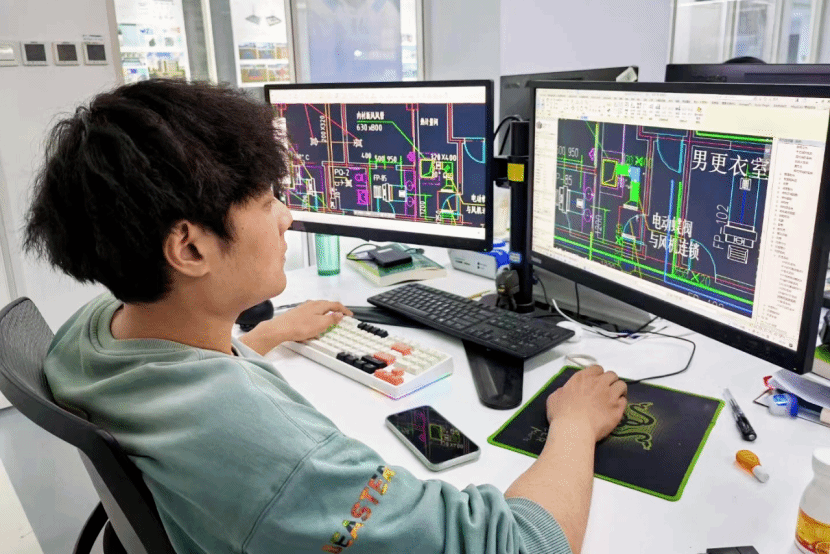
Students from the Intelligent Construction program participate in a BIM implementation and development project
In addition to rapidly advancing institutional reforms, the university simultaneously developed an information system to support program owners in efficiently carrying out their work, providing them with a digital “cockpit” that allows them to clearly see dynamic data of their programs: objectives, current status, national benchmarks, and provincial comparisons. As Vice President Zhang Lefang of Xi’an Eurasia University stated, “In the past, program leaders focused internally; now program owners must face the market. Only in this way can the industry-oriented philosophy be truly implemented.”
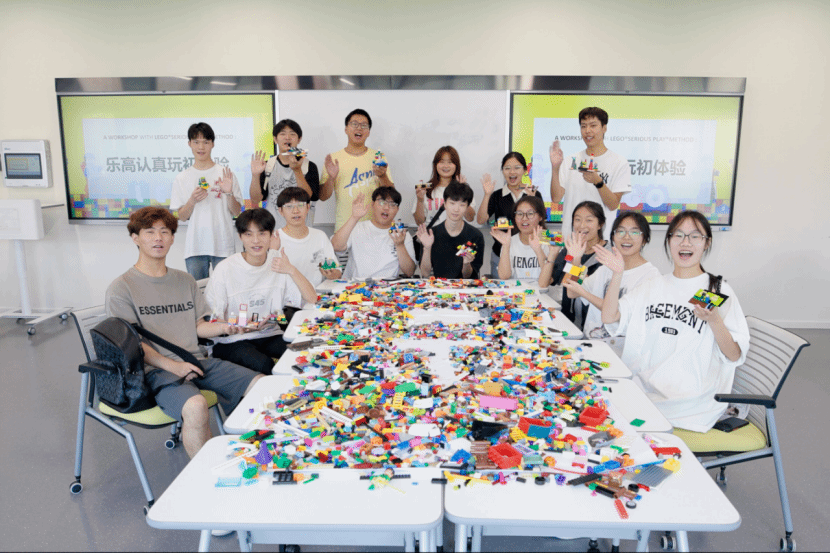
Eurasia Freshman Experience Camp, September 2024
As is widely known, the ultimate goal of industry-oriented education is graduates’ professional competence. After reforms related to program owners were established, the university began to focus on the student side. In 2024, the “Individual Development Plan (IDP)” was launched, and in September of the same year, the freshman experience program led by the School of General Education was extended from two days to six days. During the first week of enrollment, freshmen do not attend regular classes but participate in the experience program guided by more than 200 teachers. In addition to systematically understanding differences between university and high school learning and life, and becoming familiar with campus resources, students are guided to complete their IDP upon entry. Under teacher guidance, all freshmen formulate development goals for their university years and decompose tasks across academic years, which are then entered into an information system. After completing the IDP, students not only gain clearer direction for their four-year study, but the entire talent cultivation system also gains visibility into each student’s progress at every stage, enabling targeted support.
Like many universities, Xi’an Eurasia University has long attempted to strengthen career planning courses, but with limited effectiveness; courses remain courses, and only action can change the future. Under the precise guidance of the IDP, each student clearly understands their goals at every stage, while faculty and staff—especially counselors—also receive highly specific responsibilities. The entire university is thus moving in the same direction. “Now I have more than ten systems on my computer, which I open every day to check the latest data, understand student conditions, and monitor staff progress,” said Zhang Lefang. “Through the construction and continuous optimization of a ‘one student, one plan’ personalized support system, we hope every student can be seen, respected, and empowered. This reform has been highly effective; within just over a year of implementation, the proportion of students with delayed employment has decreased from 38% to 22%, and our target is below 5%.”
In recent years of reform, the university has found that employers highly value students with real project experience and national competition awards, both of which reflect strong practical ability. Therefore, project-based learning has become a key focus. Previously, enterprises did not know how to effectively connect with universities, and universities did not know how to effectively cultivate students for enterprises. Now the answer is clear: target enterprises continuously provide real projects to universities, and teachers lead students in workshops to complete real projects. University and enterprise jointly participate across the entire talent cultivation process, with student development clearly trackable at every stage.
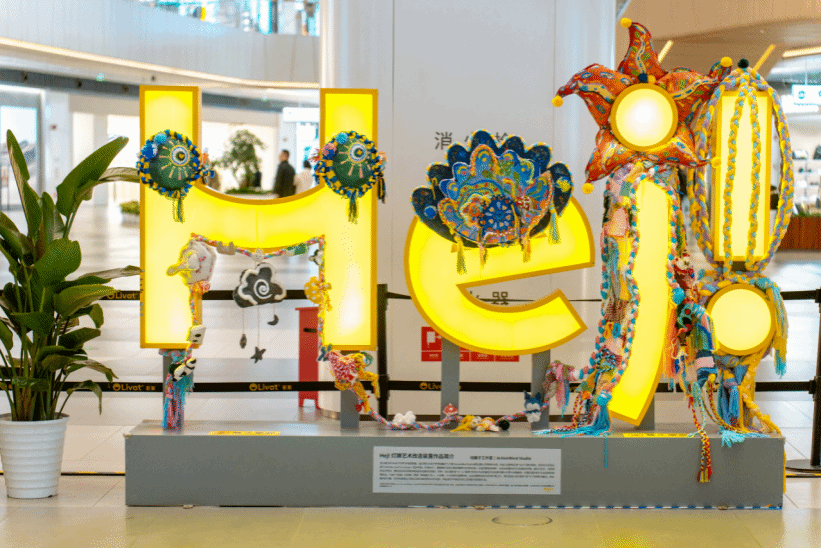
In October 2025, faculty members and students from the Brainstorm Studio of the School of Art and Design created illuminated signage for the IKEA LIVAT Xi’an store
Having undergone systematic reforms, Xi’an Eurasia University is working to aggregate target enterprises and projects through program owners on one hand, and on the other hand closely align all educational work with the IDP system, matching enterprise competency requirements with students’ four-year learning trajectories. Ultimately, the goal is to achieve precise matching between enterprises and graduates within an information system. Only in this way can the university truly implement industry orientation on the enterprise side and student-centeredness on the student side, following a path of development grounded in reality. “In the past, the student learning process in universities was a black box—unclear and untraceable. Students did not know how to proceed, and universities did not know how to support them. Under the guidance of industry orientation and student-centered principles, we have finally found a clear path forward,” said Zhang Lefang. “Although this is the right direction, it is a slow process requiring sustained effort. But as long as the direction is correct, we are not afraid of distance.”
In 2025, through various employment initiatives, the university’s graduate employment quality continued to improve, and starting salaries reached a new high.
To cultivate life-shaping capability oriented toward the “whole person”
In 2011, Xi’an Eurasia University discovered through investigation that a gap existed between the focus of student affairs work and the actual needs of students. For example, counselors mainly focused on political education, teaching support, extracurricular activities, student data management, and administrative affairs, whereas students’ more urgent needs included career guidance, psychological counseling, and interpersonal communication support. Moreover, because counselors were affiliated with academic schools at the time, they tended to focus more on teaching than on student life.
In 2012, the university launched a reform of student affairs under the principle of “student-centeredness.” Student affairs functions were restructured from management-only to four functions: management, service, consultation, and development. Organizational restructuring followed, leading to the establishment of student affairs support centers, youth development centers, mental health centers, and one-stop service centers. In residential education, the university began researching and piloting residential college systems in 2012. In 2013 and 2014, community-based reforms were piloted in the School of Art and Design and the School of Information Engineering respectively. In 2015, community systems were implemented across the university, eventually forming eight distinctive youth communities.
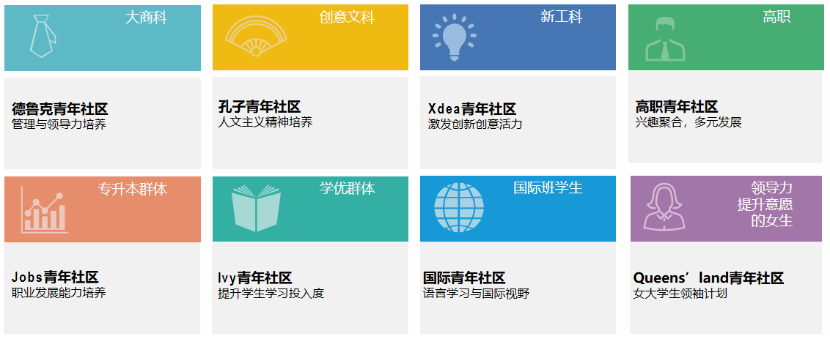
The Eight Youth Communities of Xi’an Eurasia University
In 2019, after systematically studying educational philosophies in developed countries, the university proposed a student development theory comprising four dimensions: physical development, intellectual development, social development, and career development. Student affairs were then fully restructured around these dimensions. In particular, the university emphasized cultivating students’ social development capabilities, meaning that student affairs should focus on educational functions rather than administrative tasks. The primary method is to return initiative to students through non-formal learning experiences, including community cultural activities, thematic class meetings, and diverse student clubs.
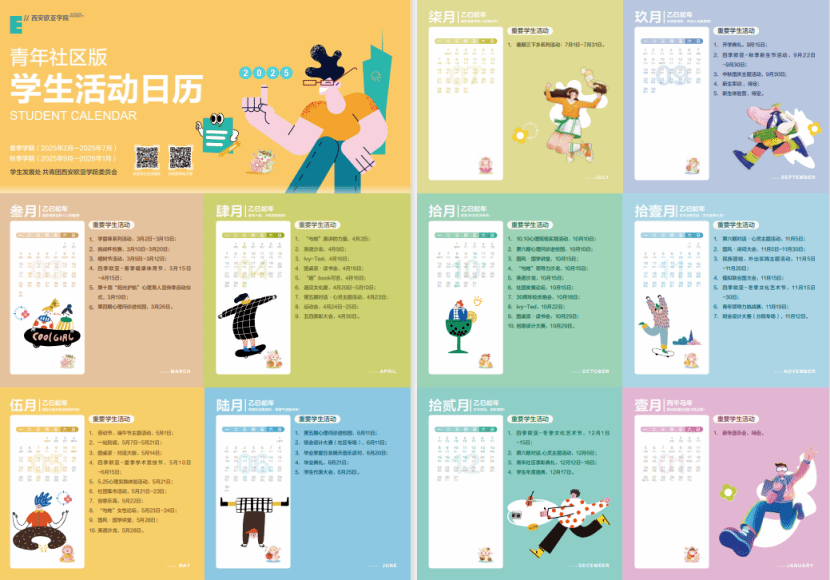
The Vibrant and Diverse Community Activities at Xi’an Eurasia University
“At Eurasia, each community activity has a clear functional orientation, and student clubs also have explicit educational purposes. Clubs operate like companies, with missions, visions, values, development plans, and financial budgeting. Activities require planning before execution and reflection afterward for knowledge management. Through such platforms, students are exposed to real professional scenarios, improving their social integration capabilities,” said Dong Yang, Director of Student Development. “Each year, there are six major university-wide events, each with a clear educational purpose. For example, the opening ceremony encourages students to express themselves, the sports meeting promotes vitality, and graduation ceremonies cultivate gratitude. Because students and faculty are deeply involved, these events become university-wide celebrations that significantly enhance students’ social development.”
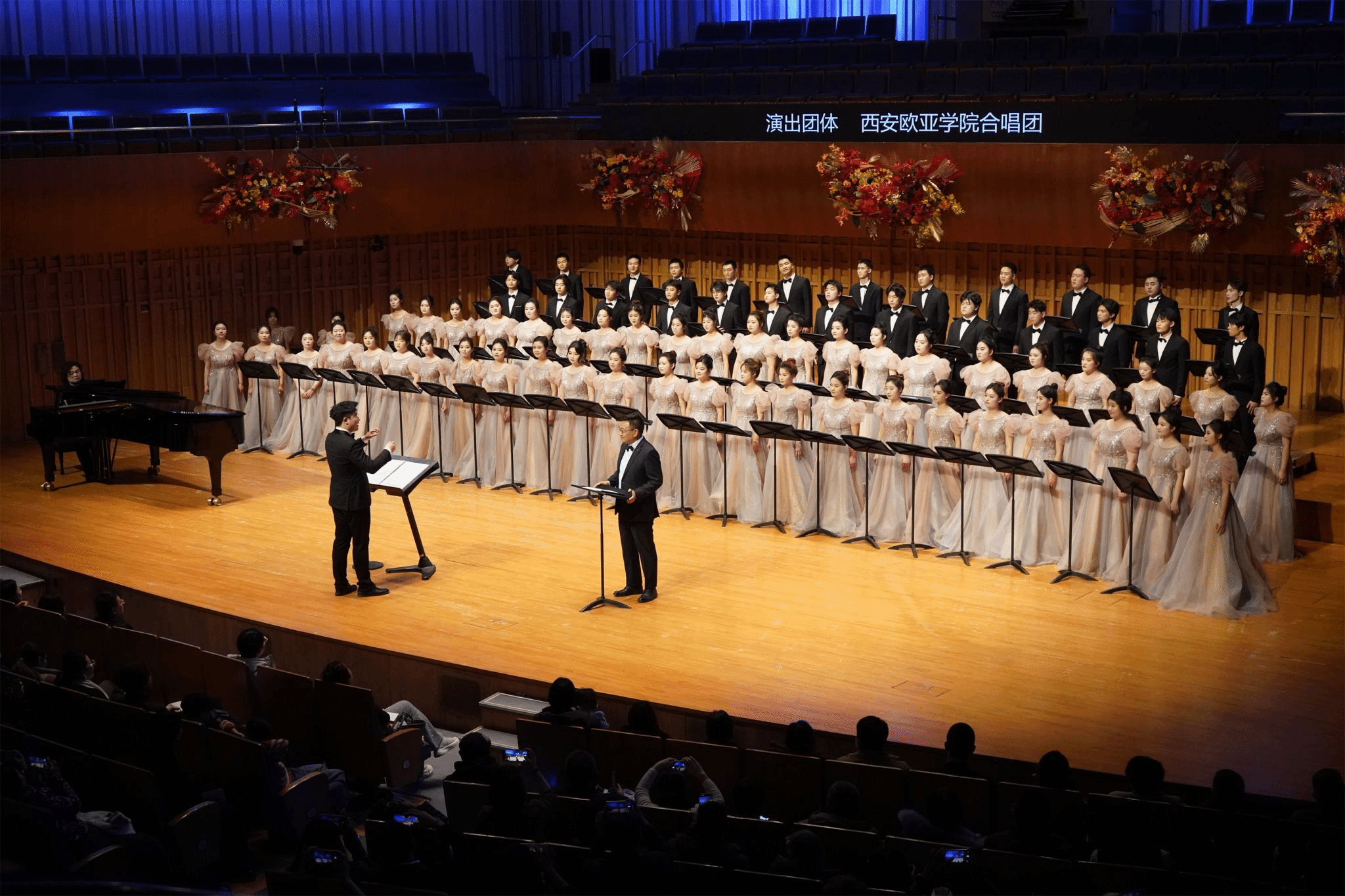
In January 2026, the Eurasia New Year Concert was held at the Xi’an Concert Hall
In addition to activities, a more innovative aspect lies in structural and spatial design. The university ensures that every student experiences four “social circles” during their studies: dormitory, class, club, and workshop. Mixed dormitory systems are implemented, with no more than two students from the same major per dormitory, promoting interdisciplinary interaction. Students are also required to join at least one club during their studies. Project-based learning further requires cross-grade collaboration in workshops. Through these mechanisms, the university significantly expands students’ social interaction networks.
Another structural innovation is the “1+6+N” community governance model, where “1” refers to a community secretary, “6” refers to counselors, and “N” refers to student leaders. This ensures that students also participate in governance, expanding opportunities for leadership development. At the same time, all work-study positions are redesigned with clear job descriptions and educational responsibilities, transforming them from financial aid roles into educational roles.
Beyond structures, spatial design has also been transformed. The university has created 24-hour student hubs, redesigned student centers into multifunctional social spaces, and built large-scale educational complexes such as the Spring Hill Innovation Complex. Across campus, more than 7,000 pieces of furniture provide spaces for interaction and collaboration. Through these environmental designs, social development occurs continuously in everyday campus life.
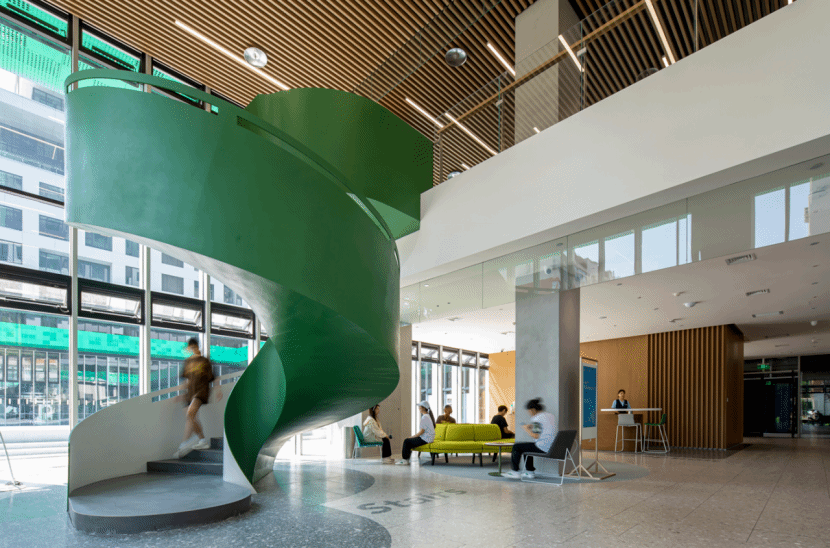
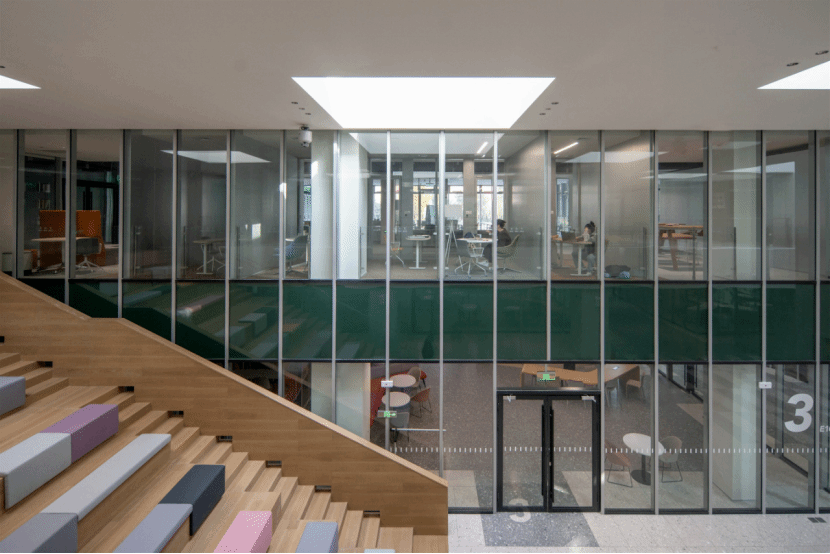
The lobby and central learning space of the Chunshanli Residence Hall
Since graduates must eventually live independently in society, the university places great emphasis on life capability development. Through structured platforms, meaningful relationships, recorded growth systems, and warm spaces, students’ life-shaping capabilities are comprehensively cultivated. Core values such as cleanliness, health, friendliness, and self-discipline have been internalized into community life, each with detailed sub-dimensions. In addition, the university launched a “Ten One Actions” plan, including habits such as maintaining hygiene routines, exercising regularly, participating in community service, reading classical books, and engaging in self-reflection.
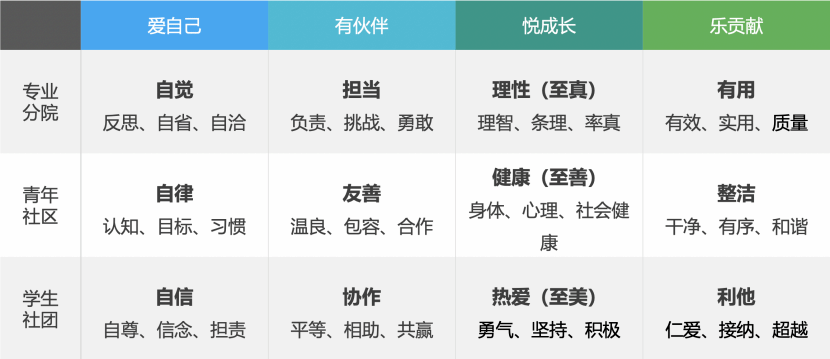
The Implications of Student Values at Xi’an Eurasia University
As German philosopher Jürgen Habermas once said, “In a sense, ‘socialization’ and ‘education’ are identical concepts; education is socialization.” Xi’an Eurasia University believes that universities should not only teach students how to make a living, but also how to create a life. Therefore, it is committed to providing high-quality learning and living experiences through structured activities, institutional design, spatial innovation, value guidance, and continuous tracking systems, comprehensively enhancing students’ life-shaping capability.
To give an example of high coverage, while excellent students actively participate in activities and counselors focus on underperforming students, the “invisible middle group” often lacks attention. In response, the university launched the “365 Together Plan” in 2025, where counselors spend time weekly engaging with different students through sports, activities, or one-on-one conversations.
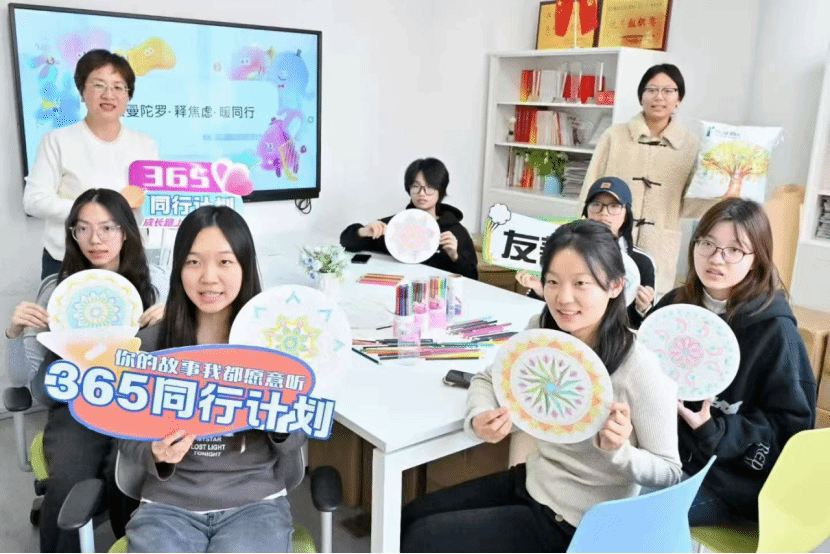
December 2025: Ivy Youth Community “365 Companions Program” Activity
According to a longitudinal study of 1,109 students from the class of 2021 over three years, students’ social development scores increased significantly from 7.61 to 8.26, an improvement of 8.5%. Sub-dimensions of social competence, capability, and willingness all showed significant growth.
To cultivate independent thinking capability oriented toward critical reflection
In 2012, the university established the School of General Education, launching reforms in general education. In 2016, it introduced “Eurasia DNA courses,” including Office Skills, Structured Writing, and Critical Thinking. In 2019, the curriculum was restructured, focusing on two core competencies: critical thinking and writing and expression, resulting in two compulsory courses: Thinking and Innovation, and Writing and Expression.
The emphasis on independent thinking stems from founder Hu Jianbo’s experience at the China Europe International Business School, where he studied critical thinking. This experience reshaped his understanding of higher education and initiated systematic reform at Eurasia. He often states that critical thinking is the reason the university has become what it is today. According to him, the ability to think independently is essential for a stable and meaningful life.
The DNA courses, strongly supported by the founder, are given priority in resources, including staffing and funding. More than 30 full-time faculty members now teach these courses, second only to ideological-political and mathematics courses in staffing scale.
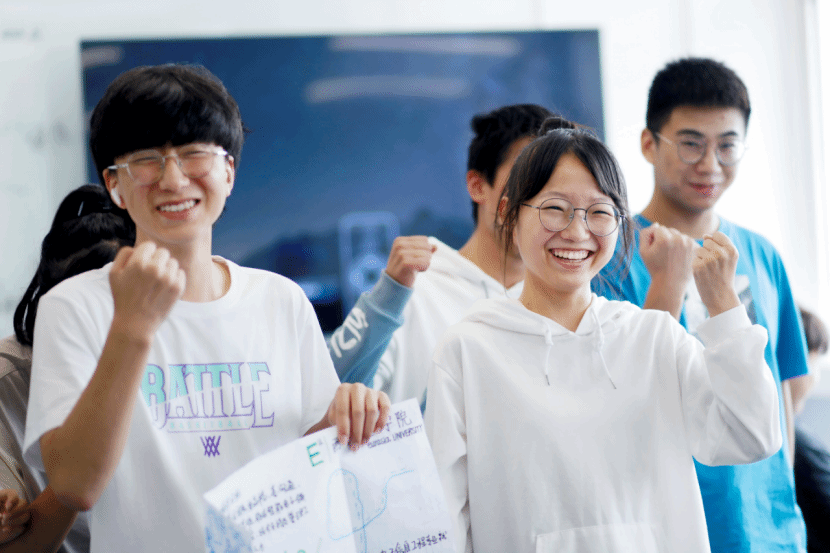
Classroom interaction during the Freshman Experience Camp, September 2022
A large-scale study involving more than 5,000 students conducted by Huang Xin during his doctoral studies at Tsinghua University found that students demonstrated significant improvements in critical thinking, innovation, teamwork, communication, analysis, and writing after completing these courses.
Critical thinking is also embedded in faculty recruitment and leadership selection processes, where reasoning and expression ability are key evaluation criteria. Writing ability is similarly emphasized as a reflection of cognitive quality.
The Thinking and Innovation course has been recognized as a provincial first-class course, while Writing and Expression has been recognized as a national first-class course. In 2024, the China Association for Logic’s Critical Thinking Committee awarded the university the first national “Critical Thinking Teaching Demonstration Base.”
Building the “Eurasia Education Field”: a four-year immersion in high-standard culture
Through 31 years of practice, the university has found that project-based learning is more effective than purely theoretical learning; independent thinking is more valuable than uniform ideology; and environmental education is more impactful than intensive instruction.
Since students live on campus for four years, the university places great emphasis on building an educational field, integrating education into daily life and the environment.
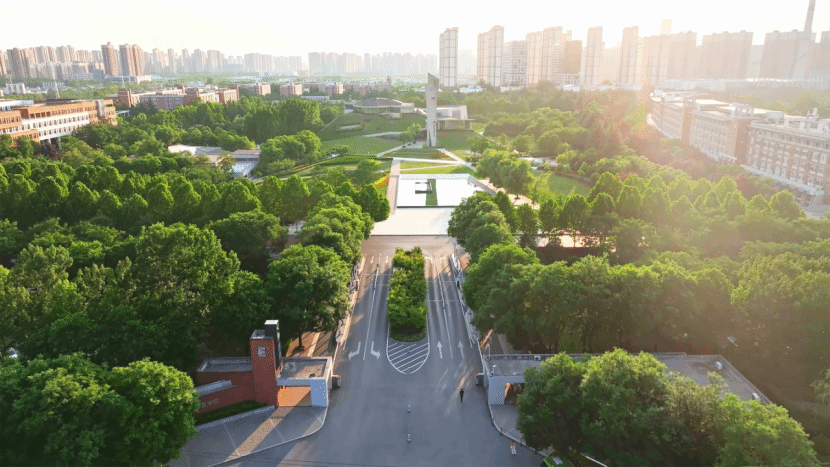
Aerial view of Xi’an Eurasia University
As one of the most beautiful campuses in Xi’an, Eurasia University features an internationalized campus environment, high-standard architectural design, cultural aesthetics, and well-designed learning and living spaces. The university continuously seeks improvement, aiming to create a new cultural landmark for the city.
In terms of cultural education, the university is known for high-quality management and student services, as well as six major annual events: opening ceremony, welcome gala, sports meeting, awards ceremony, New Year concert, and graduation ceremony. Students actively participate in planning and execution, gaining experiential learning.
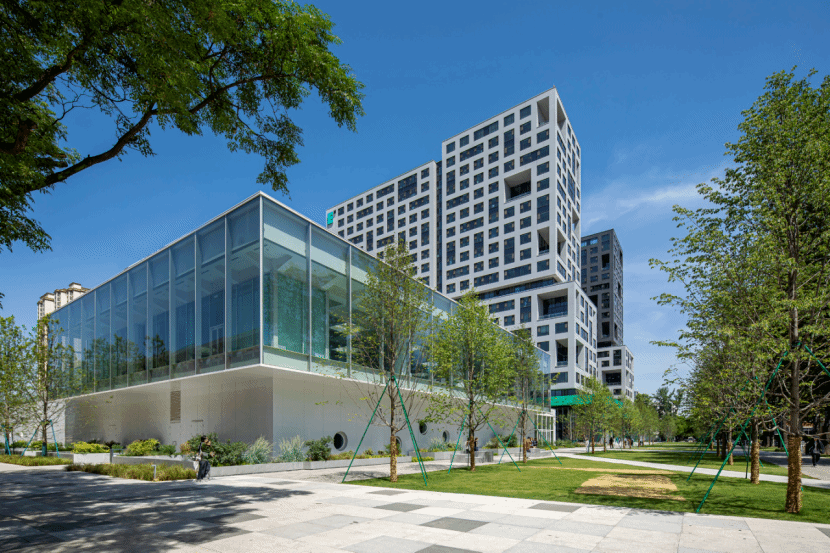
Heguang Sports and Cultural Center and Chunshanli
According to Amazon founder Jeff Bezos, high standards are learnable and contagious; once embedded in an environment, they spread naturally. The university adopts this principle, embedding high standards into daily interactions between people and environment.
After four years of immersion, students are expected to develop lifelong standards for themselves, their studies, work, and life.
In the context of Chinese higher education, Xi’an Eurasia University remains a distinctive and innovative institution. Over 30 years of development, it has delivered an answer of “industry-oriented and student-centered higher education.” Through conceptual reform and systemic reconstruction, it is forming a new educational paradigm centered on job competence, life-shaping capability, and independent thinking, while embedding high-standard culture into its educational field.
As Hu Jianbo stated, higher education is undergoing a historical transformation, and universities that truly embrace industry orientation and student-centered education will ultimately stand out.